
Sex Offender Checks in Page County
The Iowa Sex Offender Registry is the primary public search channel for Page County. It is run by the Iowa Department of Public Safety and Division of Criminal Investigation. The same statewide portal supports a name search and place-based searches by county, city, ZIP code, address, and geographic radius. The Page County Sheriff's Office does not publish a separate local registry database in the research.
Choose the channel that fits the question. Use a name when checking a specific identity, and compare aliases, date of birth, photograph, and physical details before concluding that a profile is a match. Use Page County, Clarinda, Shenandoah, Essex, a ZIP code, or an address radius when the focus is community awareness. For Iowa registration questions or a suspected local compliance issue, contact the sheriff. For a search that crosses state lines, use the national public registry.
Page County Registry Counter
The Page County Sheriff's Office performs local registration and verification duties at 323 N. 15th Street in Clarinda. The main number is 712-542-5193. General public office hours are 8:00 a.m. to 4:30 p.m. on weekdays, but those hours do not prove that registry appointments are walk-in. Call first for the current registration, update, or verification process.
Iowa law places the public portal and local sheriff in distinct roles. DCI maintains the statewide internet system. The sheriff receives and checks local information, completes required registration work, and acts on suspected noncompliance. A Page County resident should not use the counter as a substitute for the public map, and a public search result should not be used to confront anyone. Direct a safety concern or suspected violation to law enforcement.
Page County Sheriff's Office
323 N. 15th Street
Clarinda, IA 51632
712-542-5193
Weekdays, 8:00 a.m. to 4:30 p.m.
Call for current registration and verification instructions before visiting.
How to Search the Iowa Sex Offender Registry
The official portal lets readers filter Page County sex offender records without relying on a commercial people-search service. Start broad enough to avoid a spelling miss, then use the profile details to confirm a possible match. A radius search needs a valid street address and depends on the map's ability to place that address correctly.
- Open the Iowa Sex Offender Registry and review its terms for lawful public use.
- Enter a first or last name, or choose Page County, a city, ZIP code, address, and radius.
- Review the list or map and compare names, aliases, photographs, and location details.
- Open the full profile and read the offense, tier, registering jurisdiction, and status fields together.
The official Iowa registry interface is the source for a Page County sex offender search.
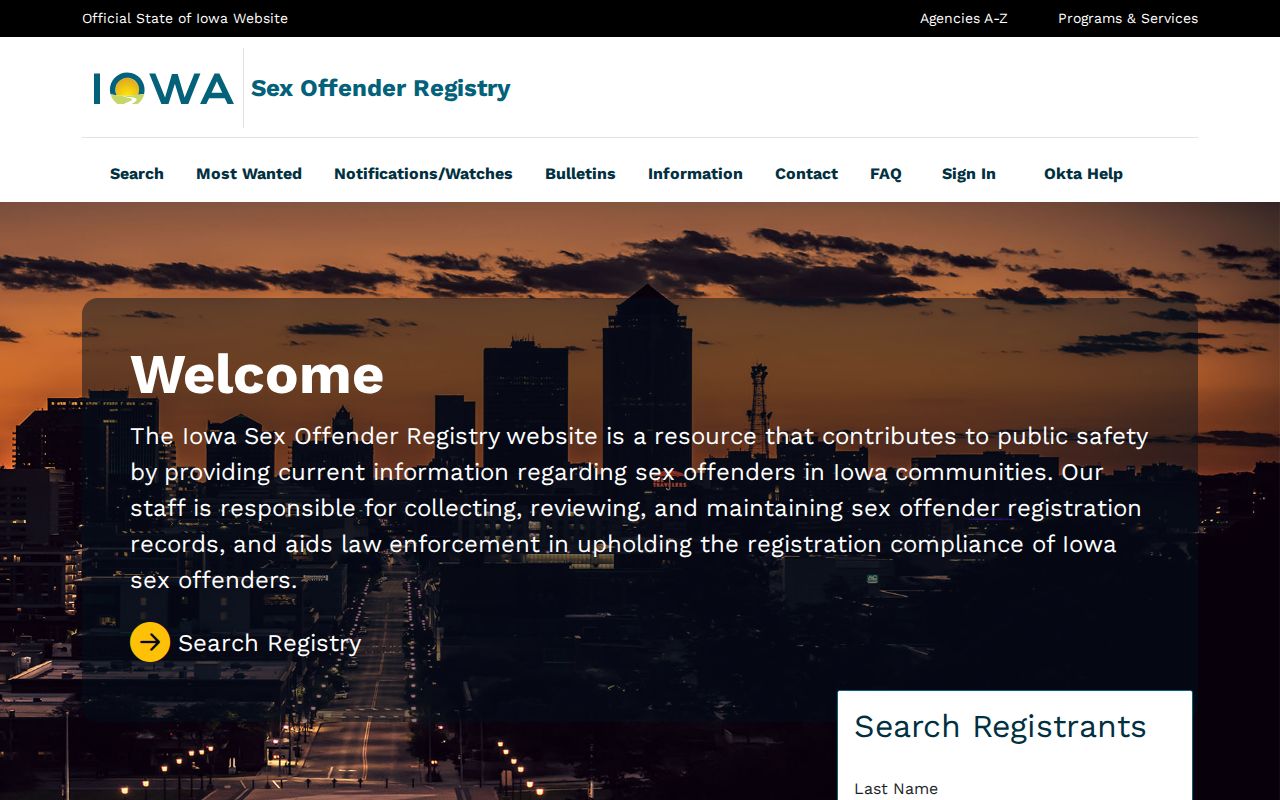
Its filters support both a known-person search and a place-based check for Page County communities.
| Field or control | Type | Required | How to use it |
|---|---|---|---|
| Last / First Name | Text | Conditional | Search a known name; profiles may list aliases. |
| County | Dropdown | Conditional | Choose Page for countywide results. |
| City | Text or dropdown | Conditional | Use Clarinda, Shenandoah, Essex, or another municipality. |
| ZIP Code | Text | Conditional | Enter a five-digit Iowa ZIP. |
| Address | Text | Radius search | Use a valid street address for map results. |
| Radius | Dropdown | Conditional | Choose from the distances displayed by the live portal. |
| Map / List | View controls | No | Switch between geographic and list views. |
| Search / Clear | Buttons | No | Run or reset the query. |
Page County Radius Search Limits
A radius result is only as sound as its geocoding. Geocoding is the process that turns a typed address into a point on a map. A misspelled road, rural route, new address, or boundary mismatch can shift that point or fail to place it. The result should be read as a search aid, not as a survey of a legal boundary.
Address data can also change between verification events. A registrant's public location may be updated after a move is reported and processed. Iowa Code §692A.121 requires relevant updated or corrected information to reach the public site within five business days, but that rule does not make every map point error-free. Try the county, city, and ZIP filters in addition to a radius. If a known person's profile and the map appear to conflict, report the concern to the Page County sheriff instead of trying to resolve it in person.
Note: An empty radius result is not proof that no registrant lives elsewhere in Page County.
Inside a Registry Profile
A public Iowa profile joins identity, location, offense, and registration fields. Read them as a set. A shared name by itself is not enough. The public system may list a date of birth, aliases, photographs, physical descriptors, identifying marks, geographic information, offense details, tier, vehicle data, registering jurisdiction, and a possible noncompliance indicator.
| Name and aliases | Displayed name, nicknames, and other listed names, including designated ethnic or tribal names. |
|---|---|
| Photo and descriptors | Photographs, physical description, and identifying marks selected for public disclosure. |
| Residence or location | Public location detail, city, county, ZIP, and mapped geography at the statutory level. |
| Offense | Qualifying offense, statute or jurisdiction, and conviction or adjudication information. |
| Tier | The Iowa tier classification that controls registration duties and general duration. |
| Registration status | Registering jurisdiction and a displayed compliance or noncompliance status when provided. |
| Vehicle and other data | Vehicle information and other facts that chapter 692A designates for public release. |
Some data remains law-enforcement-only. Absence from a public Page County search does not establish that a person has no registry duty. It may reflect a search mismatch, a legal limit on public fields, or a location beyond the chosen filter.
Page County Registry Versus NSOPW
The Iowa portal is best for Iowa detail and Page County filters. The National Sex Offender Public Website, operated by the U.S. Department of Justice, adds a cross-state layer by searching participating jurisdictions. It is useful when a person or family has ties outside Iowa or when a location is near a state line.
NSOPW does not replace Iowa's source profile. Open the originating jurisdiction's record and apply that jurisdiction's definitions, update cycle, and disclosure rules. If a national hit points back to Iowa, compare it with the Iowa registry profile and use the Page County sheriff for a local compliance concern.
The national public registry search expands a Page County check beyond Iowa.
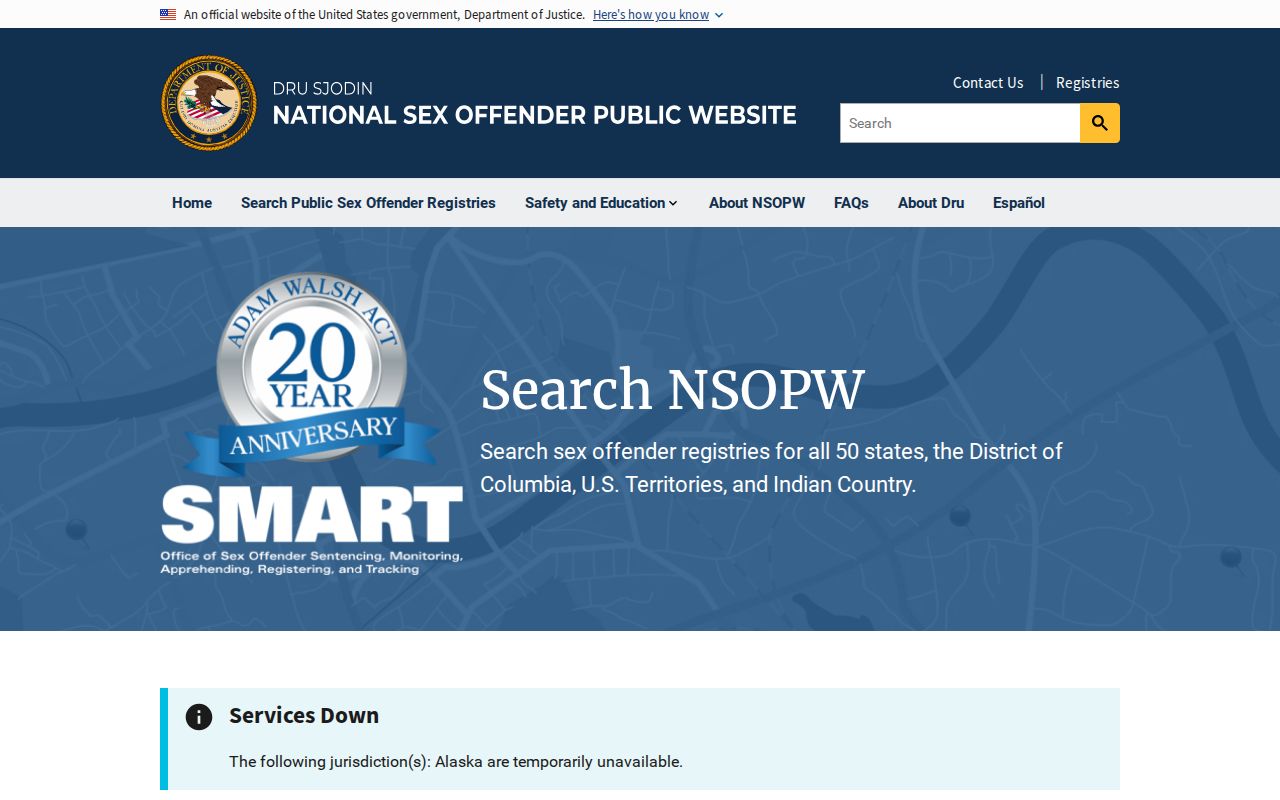
The national view is a routing layer, while Iowa remains the source for the state's profile and tier details.
Iowa Registration Levels and Requirements
Iowa uses Tier I, Tier II, and Tier III. The tier is a legal classification tied to offenses listed in Iowa Code §692A.102. It sets a general registration period and helps determine the verification schedule. It is not a risk score and should never be used as a prediction of future conduct. Do not infer a tier from a plain-language offense title when the profile or statute supplies the classification.
| Iowa tier | General basis | General duration | Verification concept |
|---|---|---|---|
| Tier I | Offenses classified Tier I by §692A.102 | Ordinarily 10 years | Lower-frequency schedule under §692A.108; confirm the current cadence. |
| Tier II | Offenses classified Tier II by §692A.102 | Ordinarily 25 years | More frequent than Tier I. |
| Tier III | Offenses classified Tier III by §692A.102 | Ordinarily lifetime | Highest-frequency verification. |
Time may be tolled while a person is incarcerated or in another status named by law. Juvenile and adult rules can differ, and modification follows §692A.128. The public profile and current statute are stronger sources than a duration guessed from the offense label.
The current Iowa registry law sets the duties used in Page County.
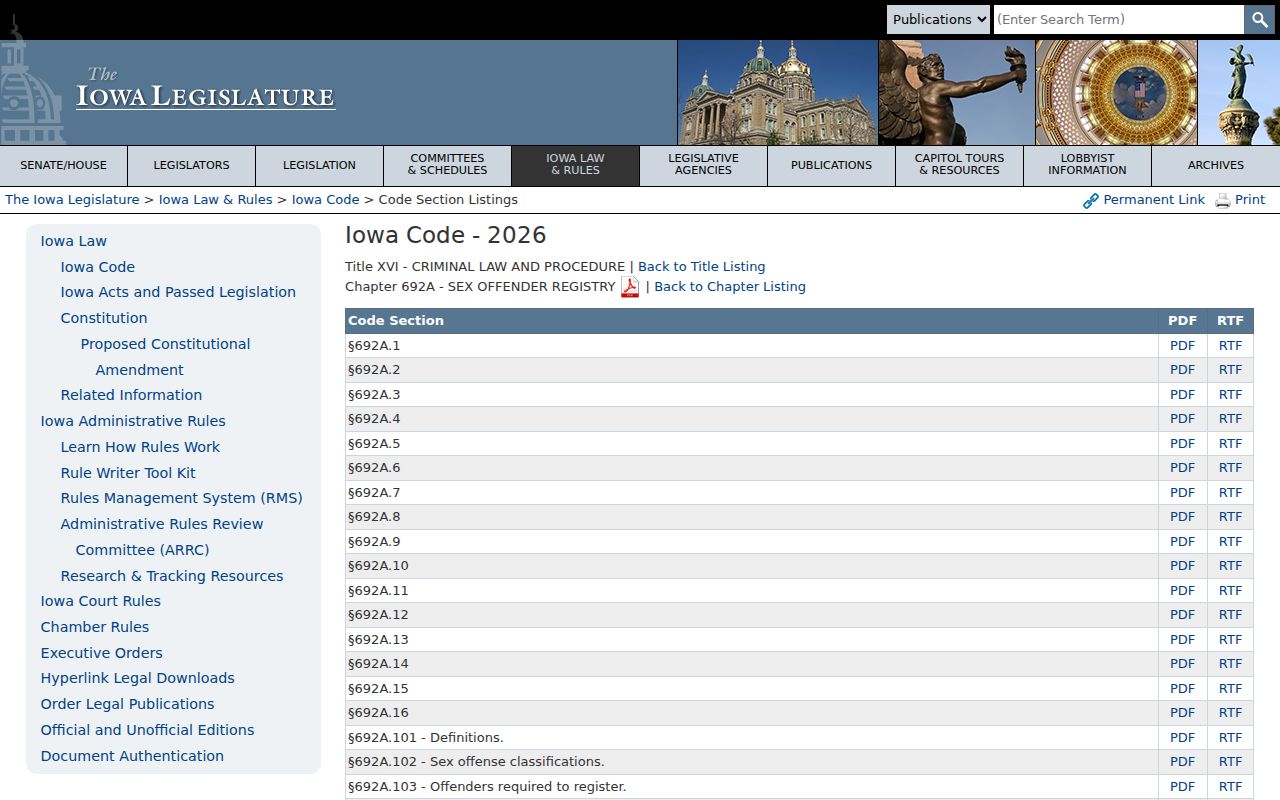
Chapter 692A should be checked for the exact tier, duration, verification, exclusion-zone, and modification rule at issue.
Page County Residence Rule Questions
Residency and presence restrictions are separate from routine sheriff verification. Iowa Code §§692A.113 through 692A.115 address exclusion zones, residence or presence limits, and specified activities. Section 692A.108 governs verification schedules, while §692A.120 describes sheriff duties. Meeting one duty does not answer every question under the other provisions.
For a Page County address question, begin with the live profile and the current statute. Map distance is not the sole legal test, and the research does not support a county-specific promise about how any address will be ruled. The Page County sheriff can explain the current registration process but cannot turn a public map into legal advice. A registrant seeking a change or modification should use the statutory and court process that applies to the individual record.
Page County's Five-Day Update Window
Iowa Code §692A.121 requires relevant updated or corrected information to be supplied to the public internet site within five business days. That gives Page County readers a concrete update rule, but it is not a promise that every fact changes at the moment it is reported. Local processing, data transfer, and map placement still occur.
If a Page County profile appears stale, save the exact public field, note when it was checked, and contact the sheriff. Do not publish assumptions or confront the listed person. The sheriff can compare the concern with the registration information available to law enforcement. A good report is specific: identify the profile, the field that may be wrong, and the basis for concern.
The Iowa Open Records Law provides broader public-record context, though registry disclosure is chiefly controlled by chapter 692A.
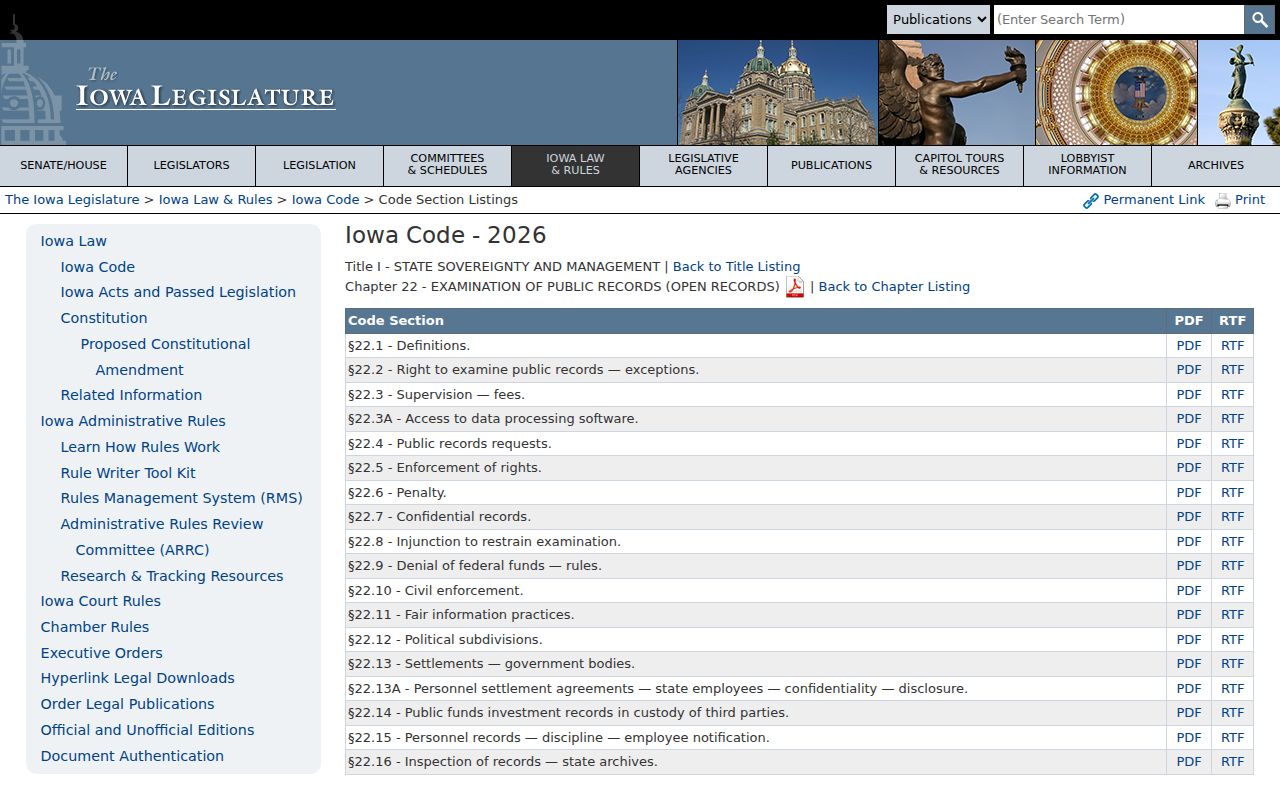
The two chapters serve different roles, so a chapter 22 request does not erase registry-specific limits.
Page County Registry Disclosure Limits
Public access does not mean that every piece of government-held data appears online. Chapter 692A identifies relevant information for release, while law-enforcement-only fields remain protected. Juvenile status can also require close reading because juvenile and adult registration, disclosure, and modification rules are not identical.
The Iowa juvenile justice chapter supplies the separate confidentiality framework relevant to some Page County records.
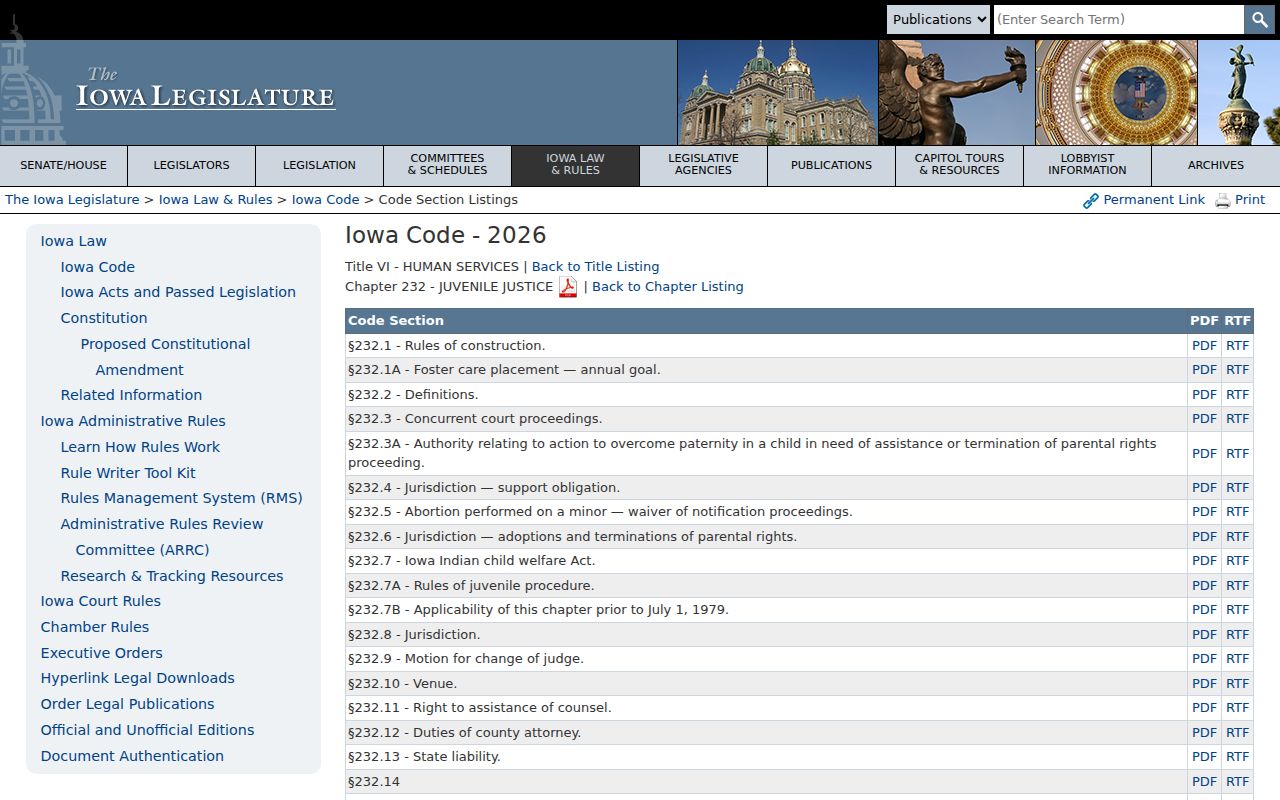
This is one reason a missing public field or absent name cannot be treated as proof that no confidential or restricted record exists.
Community Notification and Lawful Use
Registry information supports personal, family, and community safety. Use Page County results to learn what the public profile states, plan sensible precautions, and give law enforcement a clear report when noncompliance is suspected. Do not confront a registrant, publish claims beyond the official record, or turn a map result into a claim about future conduct.
The public system can be incomplete between updates, and two people can share a name. Verify identity from multiple profile fields. For urgent danger, contact law enforcement. For a nonurgent Page County registration concern, call the sheriff at 712-542-5193 and provide the profile and the fact that appears inconsistent.
Use registry data lawfully: Iowa Code §692A.121 provides public access for safety. Misusing registry information to threaten, harass, intimidate, or aid another offense is a crime.